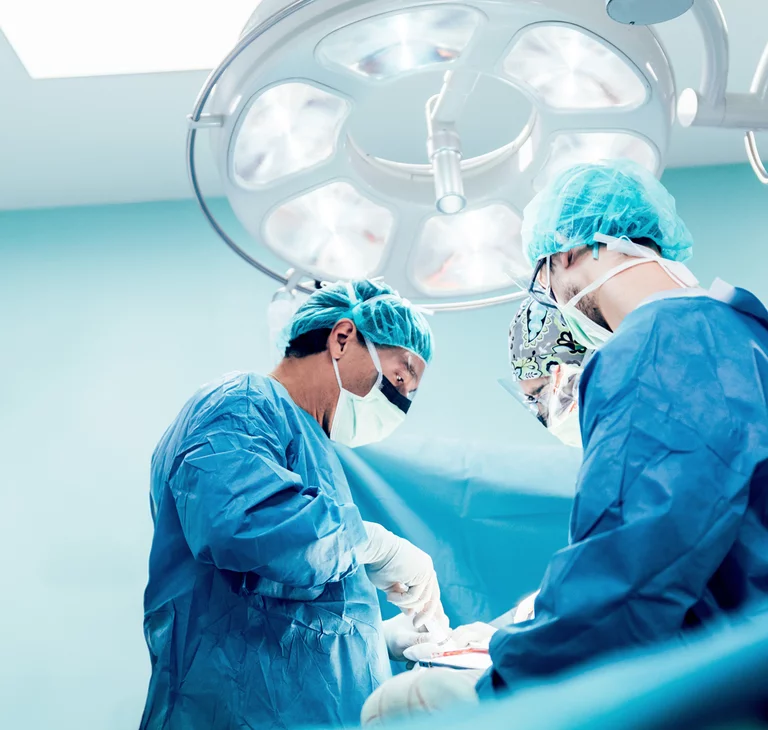
Always Ready for Action: Efficient Air Handling Units for Hospitals
Hospitals are not ordinary buildings – they form part of critical infrastructure and must operate reliably even in times of crisis. This means maximum hygiene, absolute operational safety, pleasant working and living conditions, and at the same time energy efficiency. Hubert Berndt, WOLF Business Development Manager for Healthcare, explains the challenges and ventilation solutions for hospitals.
Many customers see you as the go-to expert for hospitals. What sets you apart?
Hubert Berndt: Our strength lies in understanding and implementing the complex requirements of the healthcare sector in a holistic way. What truly distinguishes us is the combination of technical expertise and hands-on experience in the industry. We know how important it is to provide the right solution for each facility and to ensure that hospital operations are not disrupted during commissioning or maintenance. That is why we rely on intelligent systems that can be flexibly adapted and centrally controlled.
Our customers appreciate that we do not merely supply equipment, but support them throughout planning, approval and operation – with TÜV-certified solutions that deliver safety and trust.

Hospitals face numerous requirements – such as cost pressure or the need to guarantee emergency care in any type of crisis. What challenges do you encounter?
Hubert Berndt: The greatest challenge is balancing maximum safety with cost efficiency. Hospitals must always remain fully operational – even during power outages, pandemics or natural disasters. At the same time, they face enormous financial pressure. For us, this means not only providing hygienic and fail-safe air handling units that are energy-efficient and easy to maintain but delivering complete solutions that comply with all relevant standards and guidelines – including international ones.
Another factor is the complexity of different areas: an operating theatre has completely different requirements compared to an emergency department, a consultation room or a laboratory. We offer tailored solutions for each zone – from negative and positive pressure control to specialised filtration technologies. And all of this under the premise that ongoing operations are not disrupted. This diversity makes our work demanding, but also highly rewarding.
Increasing numbers of elderly patients, new regulations and standards, or climate change: What opportunities do you see in the healthcare sector?
Hubert Berndt: Rising demands create significant opportunities for innovation. Modern air handling technology can achieve far more than in the past: it not only ensures hygienic air, but actively supports patient recovery, minimises cross-contamination and enhances staff safety. At the same time, our “Green AHU” concepts, featuring intelligent controls and heat recovery in line with CSRD guidelines and ESG requirements, can drastically reduce hospital energy consumption – cutting costs and CO₂ emissions.
Climate change and the energy transition make sustainability a central issue. Hospitals that invest in efficient systems today are well prepared for the future. In addition, new technologies such as sensor-controlled ventilation enable real-time, demand-based adjustment – a quantum leap compared to rigid, outdated systems. In short: those who modernise now gain not only safety, but also economic and ecological benefits.
Why is it more sensible to use air handling technology instead of traditional air coolers?
Hubert Berndt: Conventional air coolers blow cooled/dehumidified air into a room at high pressure, creating very different air speeds, draughts and cold air pockets, especially if there are many fixtures in the room. As a result, the temperature and humidity cannot be considered homogeneous or evenly distributed. However, this is precisely what is required for a good and consistent harvest.
Intelligent air conditioning, on the other hand, not only works according to demand and is therefore much more precise and draught-free but is also significantly more energy-efficient thanks to around 80% heat recovery. Ripening gases introduced evenly throughout the entire crop can also develop their full effect. Simply cooling the air instead of its conditioning, actually is only the second-best solution.
Why is it sensible to invest in contemporary air handling technology rather than sticking with existing ventilation concepts?
Hubert Berndt: Outdated technology cannot meet current hygiene requirements or provide precise control of temperature and humidity. On the contrary: it risks recirculating inadequately filtered air and thus distributing potential pathogens evenly throughout the room, causing cross-contamination. For example, a patient with a gastrointestinal infection could become infected with respiratory pathogens – and staff would be exposed to both risks around the clock. In a pandemic, this would have disastrous consequences.
Modern air handling systems, on the other hand, are designed for maximum hygiene. They filter air through multi-stage systems, use HEPA filters or UV sterilisation and ensure controlled airflow – without draughts and with optimal comfort. This includes laminar airflow in operating theatres and differential pressure control in various rooms. WOLF thus guarantees both occupational safety and secure comfort for patients and staff – in all seasons and climate zones worldwide.
Energy efficiency is another key factor: our systems recover up to 80% of heat from exhaust air and use it to temper supply air. This saves heating and cooling costs and reduces CO₂ emissions.
In short: investing in modern technology not only protects patients and staff but also lowers operating costs in the long term and helps preserve the environment.
What solutions do you offer to enhance hospital resilience?
Hubert Berndt: For WOLF, resilience means air handling systems that operate reliably even under extreme conditions. This includes redundant components that automatically take over in the event of failure, as well as intelligent controls that adapt to changing situations. One example is pressure control: by creating negative or positive pressure, we can separate areas and prevent cross-contamination – a crucial factor when dealing with highly infectious patients.
Our units are TÜV-certified and comply with internationally recognised air handling standards such as VDI 6022 and DIN 1946. We also apply national regulations and recommendations, such as the recently introduced HTM-03 standards for the UK. This gives operators confidence that the technology will function not only during normal operation but also in crisis scenarios. WOLF takes a holistic approach to resilience: from planning and installation to maintenance – without interrupting hospital operations.
Is the CO₂ footprint of your customers also a focus when planning ventilation technology for healthcare?
Hubert Berndt: Alongside safety, the CO₂ footprint is increasingly important; for new builds, strict requirements will apply from 2030 onwards. Hospitals currently consume enormous amounts of energy. On average, around 6,000 kWh of electricity and 29,000 kWh of heat are used per hospital bed per year – equivalent to the annual heating demand of two modern single-family homes. This is precisely where we come in. Our systems use highly efficient heat recovery, returning up to 80% of exhaust air heat. This significantly reduces heating and cooling demand and lowers CO₂ emissions.
In addition, our units operate with sensor-controlled regulation. This means that only as much air is conditioned as is required. This saves additional energy and costs. For investors, this is a strong argument, as sustainability is not only ecologically sensible but also economically attractive.
To meet the requirements of the EPBD (Energy Performance of Buildings Directive), which is to be implemented across the 27 EU countries from 2026, we have also developed certified calculation models that determine the CO₂ footprint of a WOLF ventilation unit throughout its entire lifecycle.
Are there any industry-specific special requirements for which WOLF provides solutions?
Hubert Berndt: Yes, and that is precisely what makes our work so individual. Each hospital area has its own requirements: In operating theatres, we ensure sterile conditions with low-turbulence displacement flow and positive pressure. In neonatal wards, the focus is on comfortable temperature and humidity control. In laboratories, we must not only supply fresh air but also reliably remove high thermal loads and hazardous substances.
We also offer special solutions for storage areas containing disinfectants or pharmaceuticals, ensuring precise temperature and humidity control. Our strength lies in delivering the right technology for every challenge – tailored, efficient and compliant with standards.
Hubert Berndt
WOLF Business Development Manager Healthcare
More information about WOLF solutions in agriculture: Hygienic ventilation for hospitals & clean rooms | Pro-Klima Ecosystem